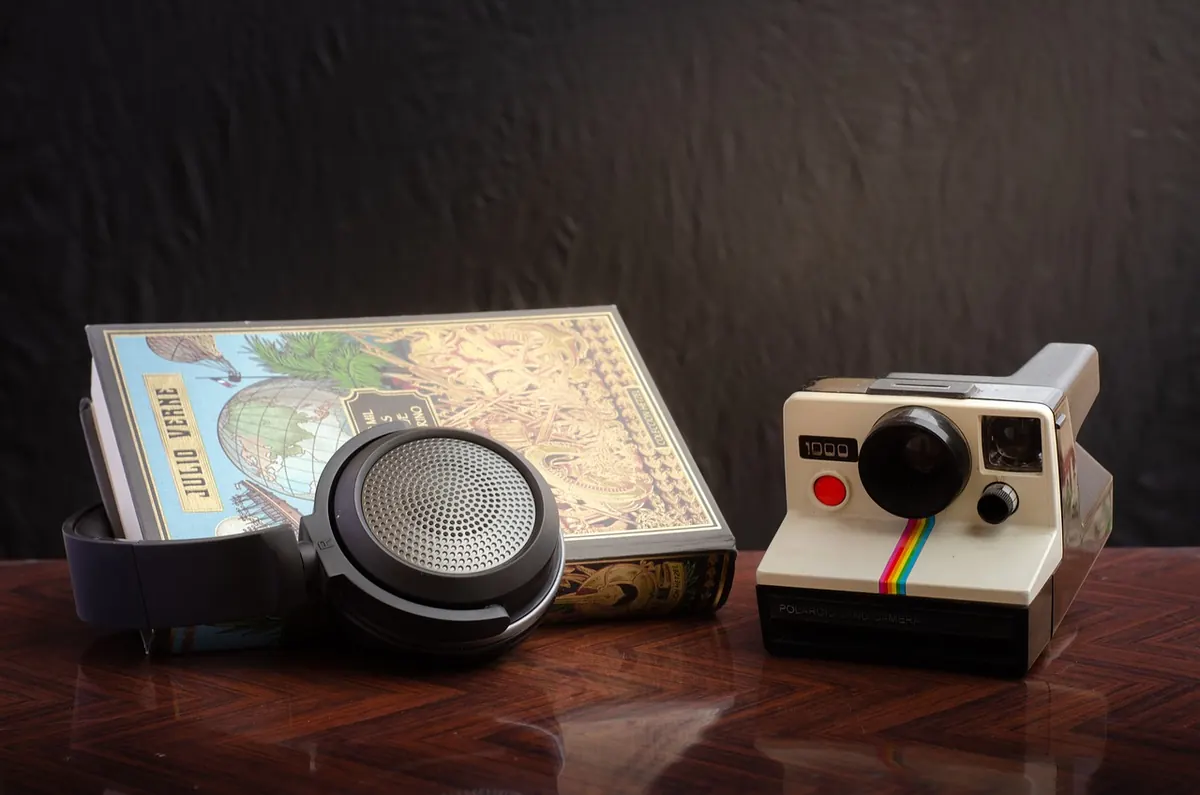
You have a forty-minute commute and a real desire to understand how inflation works, why Roman concrete lasts, or how to prune a fig tree properly. Two options sit on your phone: a podcast episode and a book. Both promise the same thing — that you will finish them and know more than you do now. The choice looks trivial. It is not. Books and podcasts ask for different kinds of attention and pay you back in different kinds of knowledge, and most abandoned learning plans die from a simple mismatch between the format and the curiosity behind it.
Depth: Where Books Still Take the Long Road
A good book can hold an argument together for three hundred pages. It can pause on a single paragraph, double back, define a term in a footnote and then use that term forty times until it belongs to you. That slow accumulation is what turns a topic from something you have heard of into something you can reason about.
Podcasts reach depth too, but usually through a different door: the long interview, the narrative series, the two hosts arguing for an hour. The best of them feel like eavesdropping on clever people. What they rarely give you is structure. You get the conversation, not the map. For a topic with real internal architecture — economics, anatomy, statistics, constitutional law — a book will save you weeks of circling.
Audio also loses certain kinds of information entirely. Charts, tables, code, maps and diagrams do not survive being read aloud. If a figure matters, you will hear it once, half-catch it, and lose it. Printed pages let you stare at a number until it makes sense.
Convenience: The Podcast Wins on Minutes, But Not on Everything
There is no contest on raw accessibility. Audio works while you wash dishes, walk the dog, fold laundry or drive. A book needs light, hands and a surface. On a day of scattered fifteen-minute gaps, the podcast is the only realistic option.
The convenience advantage is smaller than it looks, though, because podcasts carry their own friction. Finding the right episode takes longer than opening a book you already own. Ads arrive in the middle. Intros run long. And you cannot skim audio — skipping around a two-hour episode to find the part you need is genuinely unpleasant, whereas flicking through an index takes seconds.
Meanwhile, a paper book has an underrated feature: it remembers where you stopped. So does a podcast app, but the re-entry cost is higher. You press play, hear a voice mid-sentence about a person you have forgotten, and spend two minutes reconstructing context.
Retention: What Actually Sticks
Here is the uncomfortable part. Both formats feel productive while you are in them. Neither is productive by default. Listening especially can create a pleasant sense of having learned something when nothing has been stored for later use. The fix is not a better format; it is a small amount of effort on the way out.
- Write one line, not a summary. After an episode or a chapter, note the single most useful idea in a plain notes app. One sentence. If you cannot produce it, you were not listening as much as you thought.
- Explain it within two days. Out loud, to a friend, a partner, or an empty kitchen. Explaining exposes the gaps that recognition hides.
- Keep a questions list. Every format generates loose ends. Collect them, then chase two — the rest can wait.
- Return deliberately. Re-read your marked pages, or replay a single key episode, a week later. One revisit beats three new episodes.
Books have a quiet retention edge because the act of reading is slower and because you can underline, annotate and physically find things again. Podcasts win when you treat them as a first pass and pair them with notes.
Focus: Two Very Different Kinds of Attention
A book demands your eyes and hands. That is a cost and a benefit. Reading is hard to do while distracted, which means a reading session is usually a real session — thirty focused minutes can move you further than ninety minutes of background audio. If you sit down with a book and a phone on the table, expect the book to lose.
Audio is more forgiving of partial attention, which makes it excellent for low-stakes curiosity and terrible for anything that needs precision. Trying to absorb a dense argument while chopping onions means hearing every word and understanding few of them.
Match the medium to the material. Interviews, memoir, storytelling and debate flourish in audio. Recipes, formulas, timelines, anatomical diagrams and anything you will need to look up later belong in print or on screen.
Which Format Fits Your Curiosity
Most people do not have one learning style. They have a question, and the question usually points to a format.
Choose a book when…
- You want to be able to do something and check your steps as you go.
- The topic has a structure you need to see: tables, formulas, maps, timelines.
- You will want to find a specific passage again in six months.
- You have already sampled the topic and want to go properly deep.
Choose a podcast when…
- You are still deciding whether the topic interests you at all.
- Your learning time overlaps with walking, cooking or commuting.
- You learn well from people talking about their own work and disagreements.
- You want a working vocabulary before committing to a longer text.
A Practical Two-Week Experiment
Pick one topic you have been circling for months. Listen to a single well-chosen episode — not a random one, but the episode people mention when the show comes up. Then answer one question honestly: did it leave you with at least three specific questions you want answered? If yes, you have found real curiosity, and a book on that topic will now be far easier to finish because you are reading to resolve questions rather than to be informed in general. If no, try one more episode before spending money or weeks on a book.
Then build the pairing habit. Treat audio as the trailer and print as the film. Skim a chapter's opening and closing pages before you commit; listen to a host interview the author before you buy the book. Keep a single note file for everything you learn, regardless of source, and review it for five minutes on Sunday. That review is where scattered input turns into something you actually own.
One last thing worth admitting: finishing matters more than format. A short book you complete will teach you more than an ambitious one that sits at page forty, and a podcast series you listen to the end of will beat twelve half-heard episodes. Pick the format you will genuinely return to tomorrow — then return to it.
Photo: parblusa / Pixabay