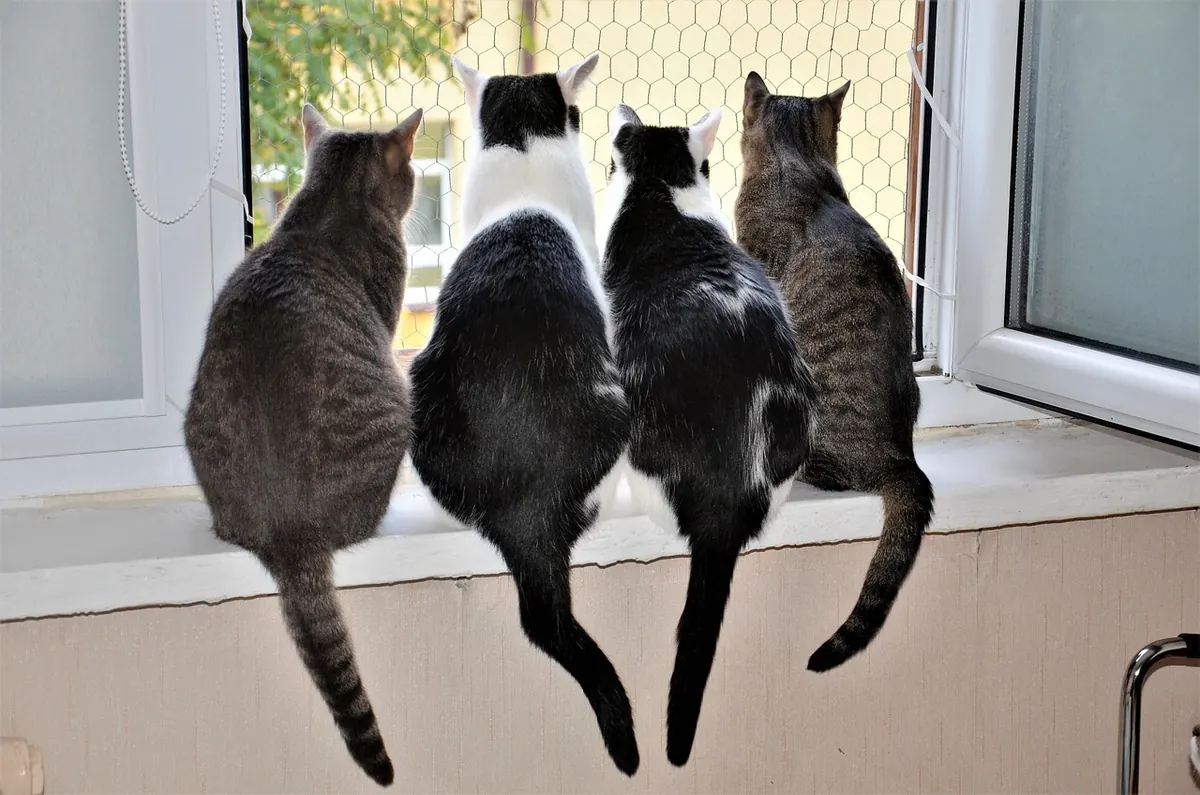
You have probably heard it aimed at a child with a hand hovering over a cupboard door, or said it yourself to a colleague about to open an email thread that was better left alone. The line lands with a small, satisfying thud of authority. It also happens to be half a proverb, attached to the wrong vice, and pointed at the wrong target. The cat in the original saying was not curious at all. It was worried.
What follows is the trail from an Elizabethan stage to American newspaper columns, and why the missing half of the sentence matters more than the part everyone remembers.
Before Curiosity: The Cat That Worried Itself to Death
The oldest version of the saying has nothing to do with inquisitiveness. In Ben Jonson's play Every Man in His Humour, first performed in the late 1590s, a character rattles off a string of curses and ends with a line close to "care'll kill a cat." Shakespeare used the same figure of speech in Much Ado About Nothing around 1599, when one character tells another that though care killed a cat, he had enough spirit in him to kill care.
Read those lines with sixteenth-century ears and the meaning is plain. "Care" then meant something closer to worry, grief, fretting, the slow grinding weight of anxiety. The proverb was a piece of sturdy comfort: even a creature with nine lives can be worn down by brooding. Get out of your own head. Nothing kills a cat faster than care.
The choice of animal makes sense once you see the joke. Cats were everywhere, proverbial for resilience, and said to have nine lives. If a cat — of all things — can be killed by anything, it must be something serious. The original target was the person lying awake at two in the morning rehearsing a conversation that would never happen.
How Worry Turned Into Curiosity
Two changes collided. The first was linguistic. The old, heavy sense of "care" faded out of everyday English, surviving mainly in phrases like "careworn" and "free from care." Once the word narrowed to mean mostly looking after things, the proverb stopped making obvious sense. A sentence whose key word has quietly changed meaning becomes a sentence people will eventually repair by guesswork.
The second change was cultural. Curiosity was being re-evaluated. For centuries it had carried a faint whiff of suspicion — prying, meddling, the servant listening at the keyhole. Then came a slow reappraisal: scientific inquiry, exploration, the reading habit. Curiosity began to look like a virtue, or at least an engine.
Somewhere in the second half of the nineteenth century, in newspaper columns and schoolroom recitations, "curiosity" slipped into the slot where "care" had been. The swap was almost certainly not one person's decision. It has the shape of a drift: the substitution sounded sharper, alliterated on the hard c, and gave the sentence a target everyone recognised. By the early twentieth century the curiosity version had crowded out the original in print.
- Late 1500s: "Care killed the cat" — a warning about fretting, not prying.
- 1700s–1800s: The word "care" narrows; the saying loses its obvious meaning.
- Late 1800s: "Curiosity" replaces "care" in newspapers and popular speech.
- Early 1900s: The grim version settles into the language as a standard rebuke.
The Second Half Everyone Forgets
Here is the part that gets dropped. The full saying runs: Curiosity killed the cat, but satisfaction brought it back.
That second clause changes the whole temperament of the proverb. It turns a warning into a joke with a moral attached. Yes, asking has a cost. Yes, you may open something you cannot neatly close. But the relief of knowing — the click of an answer arriving — brings the creature back to life. The cat does not stay dead. It saunters off, slightly singed, considerably wiser.
There is a pleasing logic to the rejoinder if you keep the nine lives in view. A cat that dies of curiosity has eight more attempts. Failure is built into the arithmetic.
Satisfaction, or Something Like It
"Satisfaction" is doing double duty. It means the pleasure of an answer, and it also means the settling of an account — the matter is closed, the question is paid off. Older forms of the rejoinder circulated alongside the "care" version too, which suggests the impulse to talk back to the proverb is old. Proverbs have always attracted reply lines; the gloomy ones attract them fastest.
Why the Grim Half Survived Alone
So why do we only ever hear the first six words?
- It is shorter. Six words, three hard consonants, no commas. The punchline costs breath.
- Warnings travel better than nuance. A parent, an editor, a manager — all of them have a use for a crisp sentence that ends a conversation.
- It flatters caution. Saying it makes the speaker sound seasoned. Nobody feels seasoned saying "but satisfaction brought it back."
- Jokes need a tone of voice. The second half is dry. Written down without a raised eyebrow, it can read as a non sequitur, so people cut it.
Curiosity Isn't the Risk; Careless Curiosity Is
The proverb is misapplied far more often than it is wrong. Most of the damage I have seen done in the name of "asking too many questions" was not curiosity at all. It was carelessness wearing curiosity's coat: reading a message not meant for you, asking in a meeting a question that exposes a colleague, opening a file you cannot un-open, chasing a detail because the chase felt productive rather than because the answer would change anything.
A useful test before you pull the thread: what will I actually do with the answer? If the answer would change a decision, a plan, or a relationship, the risk is usually worth it. If it would only satisfy an itch — and especially if it involves someone else's private business — the itch will pass, and the cat stays alive.
Second test: ask the person, not about the person. Direct questions are cheap and generally forgiven. Snooping is what gets remembered.
Using the Phrase Well
If you want to keep the proverb in your vocabulary, keep it honest. Use the short version when you genuinely mean "that door is closed for a reason and the reason is not worth the trouble" — a warning about prying, not about thinking. Use the long version when someone is hesitating over a question that deserves asking. The full line is a much better thing to say to a nervous junior colleague than the half-line ever was.
And when someone aims the grim version at you, you have a calm answer ready. Care killed the cat first; curiosity only borrowed the story later. Ask the question, then decide what to do with the answer. The cat has eight lives left, and it is already walking.
Photo: choemik / Pixabay